
Macon Truck Accident Lawyers
Why Hiring Macon Truck Accident Lawyers Early Can Protect Your Claim
Hiring Macon truck accident lawyers, such as Evans Litigation and Trial Law, early can protect your claim because key evidence may be controlled by the trucking company, not the injured person. A lawyer can send preservation letters, identify responsible parties, request driver logs, secure vehicle data, contact witnesses, review insurance coverage, and stop adjusters from pressuring the injured person into statements or quick settlements.
Truck accident claims in Macon often begin long before the injured person leaves the emergency room. Within hours of a collision on I-75 near Arkwright Road, I-16 near Emery Highway, or Eisenhower Parkway near industrial freight routes, trucking companies may already begin protecting themselves. Evans Litigation and Trial Law helps injured people respond before commercial carriers, insurance investigators, dispatch supervisors, and defense lawyers control the early facts.
That timing matters because a truck accident claim may involve more than one responsible party, including a trucking company, trailer owner, maintenance contractor, freight broker, cargo loading company, and several insurers with separate defense interests. Macon truck accident lawyers can begin identifying those parties before critical records disappear, witness accounts change, or the insurer builds a defense around incomplete facts.

Trucking Companies Begin Building Their Defense Immediately
Commercial carriers rarely treat a truck crash like an ordinary traffic accident. Serious collisions involving tractor-trailers often trigger internal reporting systems and corporate response procedures within hours. The trucking company may begin reviewing electronic records, speaking with the driver, inspecting the vehicle, and organizing documents before the injured person even obtains a copy of the police report.
This matters after crashes near heavily traveled Macon corridors, where freight traffic stays constant throughout the day and overnight hours. Trucking routes through Middle Georgia connect Atlanta, Savannah, and Florida traffic through Bibb County. Those routes increase the volume of long-haul commercial vehicles moving through downtown interchanges, warehouse districts, and merging lanes around I-75 and I-16.
Insurance Investigators Often Reach the Crash Scene Early
Commercial insurance companies frequently dispatch investigators to serious truck crash scenes within hours. Those investigators may photograph the roadway, inspect vehicle damage, speak with witnesses, and review physical evidence before weather or traffic removes important details. Their work focuses on limiting financial exposure for the trucking company.
An injured person usually does not have access to that same level of early investigation. Macon truck accident lawyers can begin preserving roadway evidence before conditions change. This may include tire marks near Mercer University Drive, damaged guardrails near Riverside Drive, traffic camera footage, or debris patterns that show how the impact occurred.
Commercial Carriers May Control Key Evidence
Truck accident evidence often stays under the trucking company’s control. This may include maintenance records, dispatch communications, route schedules, onboard computer data, inspection reports, hiring records, and internal safety reviews. Without immediate action, some records may later become incomplete, overwritten, or difficult to obtain.
Electronic logging devices create a good example of this issue. These systems record driving hours, route movement, and duty status information. If a truck driver exceeded federal driving limits before causing a crash in Macon traffic, the trucking company may already know that information before the injured person speaks with Macon truck accident lawyers.
Driver Schedules Can Reveal Unsafe Delivery Pressure
Long-haul trucking companies often operate under tight delivery deadlines. Drivers moving cargo between Atlanta ports, distribution centers, and interstate routes may face pressure to stay on the road longer than federal rules allow. A delayed delivery can affect schedules, freight contracts, and warehouse operations.
Hours-of-service violations become important in truck accident litigation since fatigue affects braking time, reaction speed, lane control, and decision-making. A tired truck driver traveling through Macon near the I-475 split may miss slowing traffic, drift across lanes, or react too late during sudden congestion. Driver logs, fuel receipts, GPS data, and dispatch messages may reveal whether the carrier encouraged unsafe scheduling practices before the collision.
Truck Accident Evidence Can Disappear Faster Than People Expect
Many injured drivers assume evidence stays available after a crash. In reality, commercial trucking evidence can change quickly. Trucks return to service. Damaged trailers move to repair yards. Digital systems overwrite older information. Surveillance footage from nearby businesses may be deleted automatically within days.
Those notices may apply to black-box information, onboard computer systems, maintenance inspections, communication records, and post-crash testing documents.
Black Box Systems Often Capture Critical Crash Data
Most commercial trucks contain electronic control modules that record operational information before impact. These systems may capture braking force, steering activity, speed, throttle use, cruise control changes, and sudden deceleration. In some cases, the data may show that the truck driver never attempted to brake before impact.
This information can directly contradict early defense claims. A trucking company may argue that the injured driver suddenly changed lanes or stopped unexpectedly. Black-box records may instead show excessive truck speed, delayed braking, or distracted driving behavior before the crash. Those details become extremely important in catastrophic injury claims involving disputed fault.
Maintenance Records May Reveal Long-Term Safety Problems
Mechanical failure contributes to many commercial truck crashes across Georgia highways. Brake issues, worn tires, steering failures, lighting problems, and neglected inspections can turn a fully loaded tractor-trailer into a major roadway hazard. Trucking companies must inspect and maintain their fleets under federal safety regulations, yet violations still occur.
Macon truck accident lawyers may review inspection histories, repair invoices, roadside violations, and maintenance logs to determine whether the carrier ignored known problems. For example, a truck traveling through Macon with worn brakes may struggle to stop near congested interstate exits or sudden traffic backups. Maintenance failures often become clearer through detailed record analysis rather than the police report alone.
Unsafe Repairs Can Increase Crash Severity
Some carriers rely on rushed repairs to keep trucks moving on schedule. Temporary fixes or delayed part replacements may create larger safety risks later. A repair issue involving brake systems, trailer coupling devices, or steering components can contribute directly to severe highway collisions.
Repair histories sometimes reveal recurring issues involving the same truck. If a vehicle repeatedly failed inspections before causing a crash in Macon, that pattern may strengthen the injury claim and expand liability beyond the individual driver.
Early Medical Documentation Protects the Value of a Truck Accident Claim
18-wheeler or truck collisions often create injuries that continue developing after the crash date. Adrenaline can temporarily mask pain, especially after high-impact collisions involving tractor-trailers. A person may initially feel soreness but later develop concussion symptoms, spinal disc injuries, shoulder damage, or nerve complications.
Medical records create the timeline connecting those injuries to the truck crash. Macon truck accident lawyers can review whether records accurately describe symptoms, treatment progression, work restrictions, and future care needs. Strong documentation helps prevent insurance companies from arguing that the injuries came from unrelated conditions.
Delayed Treatment Can Create Problems for Injured Drivers in Georgia
Insurance companies often examine treatment gaps closely in truck accident cases. If someone delays care for several weeks after a collision, insurers may argue that the injuries lacked seriousness or came from another event. This argument appears frequently in cases involving neck injuries, traumatic brain injuries, and spinal pain that worsens gradually.
That issue becomes common after truck crashes, where people attempt to keep working despite pain. A warehouse employee injured near Macon distribution routes may continue lifting freight before realizing the extent of a spinal injury. Delayed diagnosis does not automatically destroy a claim, but it often requires a stronger medical explanation and clearer documentation.
Future Medical Costs Often Exceed Initial Hospital Bills
Macon delivery truck accident settlements should reflect more than emergency treatment costs. Serious injuries may require physical therapy, follow-up imaging, injections, surgical procedures, neurological care, mobility equipment, or long-term rehabilitation. Those expenses may continue long after the first insurance offer arrives.
Macon truck accident lawyers can examine future treatment recommendations before settlement discussions begin. This step matters since commercial insurers frequently attempt to resolve claims before doctors fully understand the long-term injury picture.
Permanent Limitations Can Affect Daily Activities
Some truck accident injuries permanently affect lifting ability, balance, mobility, driving confidence, sleep quality, or physical stamina. A construction worker may lose the ability to perform heavy labor. A nurse may struggle with long shifts involving standing or patient movement. These losses affect earning ability and household stability far beyond immediate medical costs.
Truck accident claims should account for those future limitations through medical analysis, employment documentation, and treatment evaluations. Evans Litigation and Trial Law reviews those long-term effects carefully before evaluating settlement offers from trucking insurers.
Georgia Comparative Fault Rules Make Early Investigation More Important
Georgia follows a modified comparative negligence system. This means compensation may decrease if the injured person shares fault for the collision. Trucking companies understand this rule well and often attempt to shift blame quickly after a wreck.
The defense may claim the injured driver merged improperly, followed too closely, failed to react, or drove distracted near congested Macon interchanges. Those arguments can gain traction when evidence disappears or witness memories weaken over time. Early investigation helps preserve objective proof before the defense shapes the narrative.
Witness Accounts Become Less Reliable Over Time
Witness memories fade surprisingly fast after violent highway crashes. A driver who clearly remembered a speeding truck near the I-75 interchange may struggle to recall details several months later. Contact information may change, and witnesses may become harder to locate.
Truck accident lawyers often interview witnesses early before those issues develop. Immediate statements can help clarify traffic flow, lane movement, braking behavior, and driver reactions before impact. These details often become critical when insurers dispute fault percentages during settlement negotiations.
Traffic Camera Footage May Exist Only Briefly
Macon roadways and nearby businesses may capture truck accidents through traffic systems or private surveillance cameras. Footage from gas stations, warehouses, hotels, or nearby intersections may show truck movement, speed, lane changes, or impact angles.
Many systems automatically overwrite recordings after a short period. Fast action can determine whether useful footage still exists. Once deleted, that evidence may never return.
Multi-Vehicle Crashes Create More Complicated Liability Questions
Truck crashes involving several vehicles often create conflicting stories about how the collision started. One driver may blame another lane change. Another may claim sudden braking caused the wreck. Meanwhile, the truck driver may deny speeding or distraction. Macon truck accident lawyers can compare physical evidence, crash reports, witness accounts, vehicle damage, and electronic truck data to reconstruct what happened. This process often reveals facts that do not appear in the first police narrative or insurance summary.
For people injured in commercial truck crashes across Macon and Middle Georgia, early legal action can preserve evidence, protect medical documentation, and prevent insurers from controlling the claim before the full damage becomes clear. Evans Litigation and Trial Law handles truck accident cases involving tractor-trailers, commercial delivery vehicles, and interstate freight carriers throughout Georgia.
How Much Is a Truck Accident Case Worth in Macon, Georgia
The value of a Macon truck accident claim depends on proof, not a calculator or average settlement number. A crash on I-75 near Bass Road may involve a loaded tractor-trailer, interstate carrier coverage, electronic driver records, and injuries that require surgery or months of rehabilitation. A lower-speed commercial delivery crash near Eisenhower Parkway may still carry major value if the injured person develops a spinal injury, cannot return to work, or needs long-term pain management. Evans Litigation and Trial Law looks at the collision mechanics, medical course, wage history, insurance layers, and trucking company safety conduct before placing value on the claim.
Macon truck accident lawyers should separate immediate losses from future losses before settlement talks begin. Immediate losses may include ambulance transport, emergency care, diagnostic imaging, vehicle damage, missed paychecks, and early therapy. Future losses may include surgery, injections, work restrictions, reduced earning capacity, home help, mobility limits, and ongoing medical care. The value rises when records show that the crash changed the injured person’s work, health, and daily routine in measurable ways.
Severe Truck Accident Injuries Usually Increase Claim Value
Truck collisions generate massive force, especially when commercial vehicles travel at interstate speed through Middle Georgia freight corridors. A passenger car may weigh several thousand pounds, yet a loaded tractor-trailer can weigh up to 80,000 pounds under federal limits. That difference often creates catastrophic injuries rather than short-term soreness.
Serious truck accident injuries frequently involve spinal trauma, traumatic brain injuries, fractures requiring surgery, internal organ damage, nerve injuries, burns, and permanent mobility loss. These injuries affect settlement value since treatment becomes more extensive and recovery periods become longer.
Traumatic Brain Injuries Often Require Long-Term Care
Brain injuries create some of the highest-value truck accident claims in Georgia. A violent impact near Macon traffic congestion may cause the head to strike windows, airbags, steering components, or seat structures during the collision. Some victims lose consciousness immediately. Others develop symptoms gradually during the following days.
A concussion may later develop into chronic headaches, memory issues, concentration problems, dizziness, light sensitivity, or mood changes. Brain injury treatment often includes neurological evaluations, imaging studies, rehabilitation therapy, medication management, and cognitive treatment plans. Those long-term medical needs increase claim value substantially.
Brain Injuries Often Affect Employment
A traumatic brain injury can interrupt work long after physical wounds begin healing. Someone who previously handled detailed financial work, commercial driving, teaching, warehouse coordination, or healthcare duties may struggle with memory, focus, or fatigue after a truck crash.
Lost earning ability becomes especially important in these cases. Macon truck accident lawyers may review employment history, wage records, physician restrictions, and future work limitations when calculating damages tied to cognitive injuries.
Delayed Symptoms Often Complicate Brain Injury Claims
Many truck accident victims leave the crash scene believing they avoided major injury. Hours later, confusion, headaches, nausea, balance problems, or blurred vision may appear. Insurance companies sometimes challenge delayed symptoms by arguing that the injury lacked seriousness.
Medical documentation becomes critical in these situations. Treatment records, neurological testing, and physician evaluations can connect delayed symptoms directly to the truck collision and strengthen the value of the claim.
Spinal Injuries Can Create Permanent Financial Losses
Spinal injuries remain common in Macon tractor-trailer crashes involving rear-end impacts, underride collisions, jackknife accidents, or rollover crashes. The force generated during these collisions can damage discs, nerves, vertebrae, and surrounding tissue, even when the vehicle cabin appears mostly intact.
Some injured drivers develop herniated discs requiring injections, surgery, or long-term rehabilitation. Others lose mobility entirely. Those injuries affect settlement value since they often require continuing medical care and may permanently reduce work capacity.
Surgery Often Raises Truck Accident Settlement Value
Surgical treatment usually signals a more severe injury picture. Procedures involving spinal fusion, hardware implantation, shoulder reconstruction, or orthopedic repair often create larger medical expenses and longer recovery periods.
Truck accident settlements should account for surgical costs, hospital stays, physical therapy, follow-up care, and future treatment recommendations. Macon truck accident lawyers may also review whether additional surgeries are likely later.
Physical Limitations Affect More Than Employment
Spinal injuries often interfere with daily movement and routine activities. Someone injured in a Macon truck crash may struggle with lifting groceries, driving long distances, caring for children, climbing stairs, or standing for extended periods.
Those limitations affect claim value since Georgia law allows recovery for pain, suffering, and reduced quality of life. Detailed medical records and treatment documentation help explain those daily disruptions clearly.
Insurance Coverage Plays a Major Role in Truck Accident Cases
Commercial truck accident claims often involve larger insurance policies than ordinary car accident cases. Federal regulations require many interstate trucking companies to carry substantial liability coverage. Some carriers maintain layered policies involving several insurers.
This matters after severe truck crashes in Macon since catastrophic injuries may exceed standard policy limits quickly. Emergency treatment, surgery, rehabilitation, wage loss, and future care can create financial losses far beyond the value of a normal vehicle collision claim.
Multiple Companies May Share Liability
Truck accident claims often involve more than one defendant. The truck driver may share blame with the trucking company, cargo loader, maintenance contractor, trailer owner, or parts manufacturer. Identifying every liable party may increase available insurance coverage.
For example, a collision near Macon’s industrial freight routes may involve improperly secured cargo shifting inside the trailer during highway travel. In that situation, liability may extend beyond the truck driver alone.
Maintenance Contractors Can Increase Available Coverage
Some trucking companies outsource vehicle inspections and repairs to third-party maintenance businesses. If brake failures, tire defects, or steering issues contributed to the crash, those contractors may become part of the claim.
This issue becomes important when reviewing commercial vehicle maintenance histories. A truck with repeated brake violations or failed inspections may support broader negligence claims involving several defendants.
Freight Brokers May Influence Delivery Schedules
Freight brokers sometimes coordinate shipping schedules between carriers and commercial customers. In certain situations, delivery demands and scheduling pressure may contribute to unsafe driving practices or fatigue-related crashes.
Investigating these relationships takes a detailed review of dispatch communications, contracts, and shipping records. Commercial truck accident claims often require deeper investigation than standard auto accident cases.
Lost Income Significantly Affects Settlement Value
Truck accident injuries often interrupt employment for weeks or months. A person recovering from spinal surgery, brain trauma, fractures, or chronic pain may lose regular income during treatment. Those losses become part of the injury claim.
Macon truck accident lawyers review pay records, tax returns, overtime history, bonuses, self-employment records, and physician restrictions when calculating wage losses. Future earning limitations may increase settlement value further.
Physically Demanding Jobs Create Larger Financial Risks
Truck accident injuries affect physically demanding jobs particularly hard. Warehouse employees, nurses, mechanics, electricians, delivery drivers, construction workers, and manufacturing employees may lose the ability to perform lifting, climbing, bending, or repetitive movement after a severe crash.
A back injury that appears manageable in an office setting may end a physically intensive career completely. Future wage loss calculations often become more substantial in these situations.
Self-Employed Workers Often Face Unique Challenges
Self-employed individuals frequently experience financial pressure immediately after a truck accident. Missed contracts, delayed projects, lost customers, and interrupted operations can reduce income quickly.
These claims require detailed financial documentation. Business records, invoices, scheduling calendars, tax filings, and client communications may help demonstrate the economic impact caused by the crash.
Future Earning Capacity May Exceed Current Wage Loss
A younger worker facing permanent physical restrictions may lose decades of future earning opportunity after a catastrophic truck collision. Settlement evaluations should account for future employment limitations rather than only immediate missed paychecks.
Economic losses tied to future work restrictions often require a detailed review of career history, training, advancement opportunities, and long-term medical limitations.
Trucking Company Conduct Can Influence Case Value
The conduct of the trucking company before the crash may affect settlement negotiations significantly. A carrier that ignored maintenance problems, pressured drivers into unsafe schedules, or hired unsafe operators may face stronger liability exposure.
Federal trucking regulations require carriers to maintain driver qualification files, inspection records, maintenance systems, and hours-of-service compliance. Violations involving these rules may strengthen the injured person’s claim substantially.
Safety Violations Often Increase Settlement Pressure
A trucking company with repeated safety violations may face greater litigation risk after a serious collision. Inspection failures, prior crashes, brake violations, logbook issues, and unsafe driving histories may become important evidence during negotiations. That pressure can influence settlement discussions, especially after catastrophic crashes involving severe injuries or fatalities.
Driver Fatigue Creates Serious Liability Exposure
Fatigued truck driving remains one of the most dangerous issues in commercial transportation. Drivers hauling freight through Macon overnight may spend long hours behind the wheel while attempting to meet delivery deadlines.
Fatigue-related crashes often involve delayed braking, drifting lanes, missed traffic backups, or failure to react before impact. Electronic logs, fuel records, dispatch communications, and GPS tracking may help reveal unsafe driving patterns.
Distracted Driving Evidence Can Strengthen Claims
Truck drivers use navigation systems, dispatch communication devices, and electronic logging systems throughout the workday. Cell phone use or distraction during interstate travel can create devastating results near congested Macon traffic areas.
Phone records, onboard systems, and electronic communications may help determine whether distraction contributed to the collision. This evidence often becomes important in high-value truck accident litigation.
Georgia Comparative Fault Laws Affect Settlement Amounts
Georgia follows a modified comparative negligence system. This means compensation may decrease if the injured person shares fault for the collision. Trucking companies frequently use this rule to challenge settlement value.
The defense may argue that another driver merged unsafely, failed to maintain speed, or reacted improperly during heavy traffic conditions. These arguments appear often after crashes involving lane changes near the I-75 interchange or merging traffic near downtown Macon exits.
How Do Georgia Truck Accident Investigations Reveal Liability
The Georgia Department of Transportation identifies the I-16 and I-75 interchange as a major safety, mobility, and freight project in Macon-Bibb County, which reinforces how important this corridor is for commercial traffic. Truck accident investigations in Georgia that look for electronic logging data, black-box information, inspection records, maintenance files, driver qualification documents, cargo records, crash scene photos, witness accounts, and medical proof determine whether an injured person receives full compensation or faces a reduced settlement shaped by missing evidence and disputed fault arguments. Commercial vehicle crashes near Macon rarely involve a simple review of the police report alone. A truck collision on I-75 near the Bass Road interchange or a commercial delivery crash along Eisenhower Parkway may involve electronic truck data, federal safety records, dispatch communications, maintenance histories, cargo documentation, and multiple corporate defendants.
Macon truck accident lawyers investigate these cases differently from a standard passenger vehicle crash. Commercial trucking companies operate under federal transportation rules, internal safety policies, and industry recordkeeping requirements. Those records can reveal whether the truck driver violated hours-of-service limits, whether the carrier ignored maintenance problems, or whether company scheduling decisions created unsafe conditions before the crash.

Crash Scene Evidence Often Reveals the First Liability Clues
The crash scene itself may contain evidence that disappears quickly after a truck accident. Tire marks, roadway gouges, shattered vehicle parts, cargo debris, lane markings, and impact positioning can help explain how the collision occurred. Heavy traffic through Macon interchanges and freight corridors often changes roadway conditions within hours.
Investigators may analyze whether the truck attempted emergency braking, drifted across lanes, or failed to react before impact. This evidence becomes important after crashes involving sudden traffic backups near I-16 merging lanes or construction traffic around major freight routes through Bibb County.
Vehicle Damage Patterns Can Expose Driver Actions
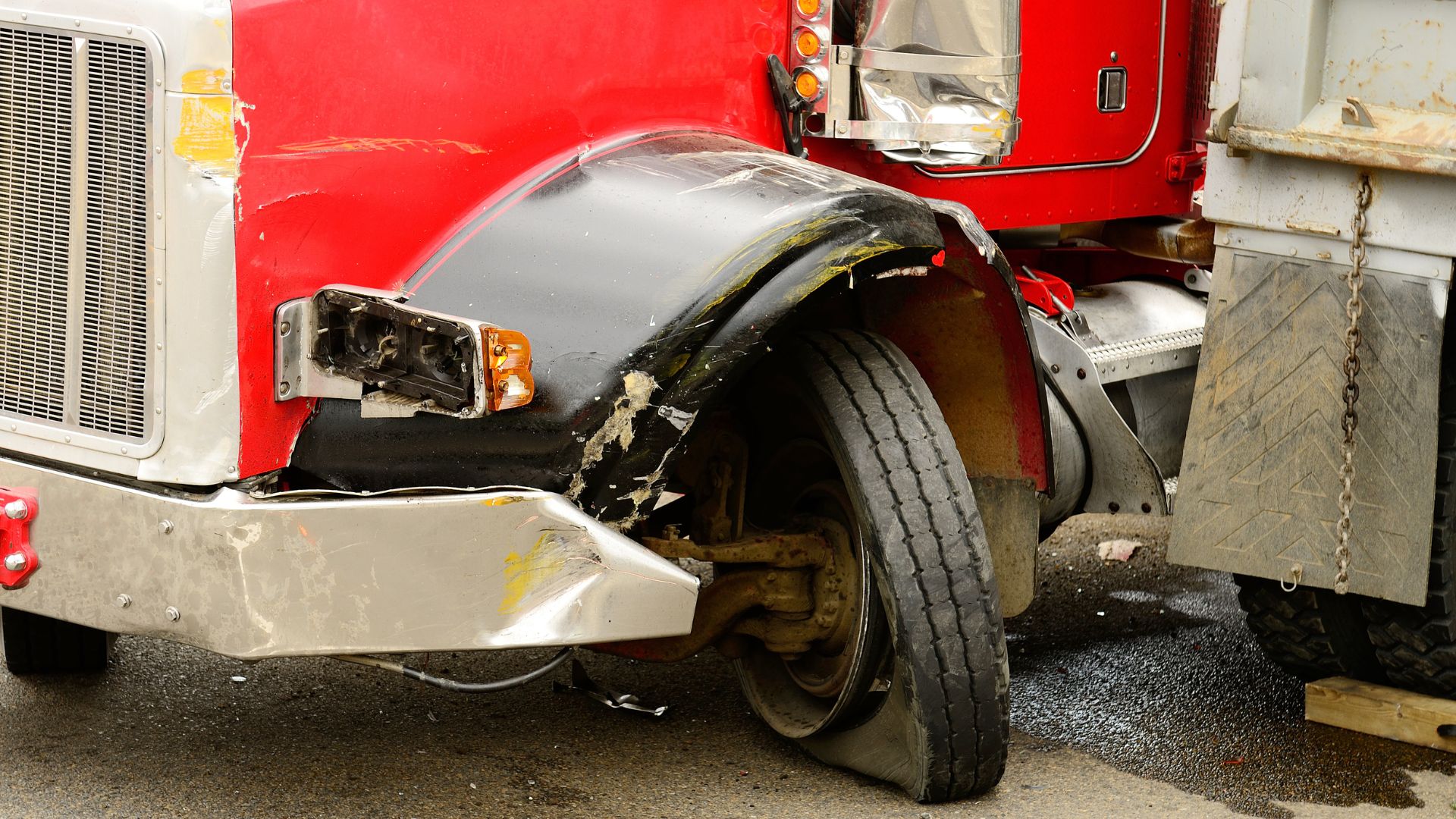
The location and severity of vehicle damage often help reconstruct a truck collision. Rear-end impact damage may indicate delayed braking or distracted driving. Side impact damage may suggest unsafe lane movement or improper merging by the truck driver.
Commercial truck crashes generate different damage patterns than ordinary car accidents because of the size and weight disparity between vehicles. Underride damage, trailer intrusion, and roof crush injuries often appear in severe tractor-trailer collisions across Georgia highways.
Trailer Positioning Can Reveal Unsafe Maneuvers
Trailer positioning after impact may reveal whether the truck jackknifed, rolled, or lost directional control before the collision. Investigators often compare trailer angles with roadway marks and vehicle resting positions to understand driver response during the final seconds before impact.
These details become important during disputed liability claims. A trucking company may argue that another vehicle caused the wreck, yet physical evidence may show that the commercial driver lost control before impact.
Cargo Spills May Indicate Loading Problems
Cargo movement inside a trailer can affect truck stability during lane changes, braking, and interstate travel. Improperly secured freight may shift suddenly and increase rollover risk or loss of control.
Investigators may examine cargo manifests, loading procedures, trailer weight distribution, and shipping records after major Macon truck crashes. Cargo companies or third-party loading contractors may share responsibility if unsafe loading practices contributed to the collision.
Electronic Truck Data Often Becomes Central Evidence
Modern commercial trucks record large amounts of operational information through onboard systems. Electronic control modules, electronic logging devices, GPS systems, and telematics platforms may capture truck speed, braking patterns, steering input, route history, engine operation, and driver hours.
This information often reveals whether the truck driver reacted appropriately before the crash. In some collisions, electronic data may show that the truck driver never attempted braking before impact despite clear roadway conditions.
Electronic Logging Devices Track Driver Hours
Federal trucking regulations require many commercial drivers to use electronic logging devices that record driving hours and rest periods. These records help investigators determine whether the driver exceeded hours-of-service limits before the collision.
Fatigue remains a major issue in interstate trucking. Drivers moving freight between Atlanta, Savannah, and Florida often travel through Macon during overnight hours when visibility decreases and reaction times slow. Macon truck accident lawyers may compare electronic logs with fuel purchases, dispatch records, toll data, and GPS tracking to identify inconsistencies.
Dispatch Communications May Reveal Unsafe Pressure
Dispatch communications sometimes expose scheduling pressure placed on truck drivers before serious crashes. Text messages, delivery updates, and route instructions may reveal unrealistic deadlines or pressure to continue driving despite fatigue or hazardous weather.
These records can expand liability beyond the truck driver alone. A trucking company that encouraged unsafe scheduling practices may face greater exposure during litigation.
GPS Records Can Contradict Driver Statements
GPS systems frequently record speed, location, stop times, and travel routes throughout the truck’s trip. This information may confirm or contradict statements made by the driver after the crash.
A truck driver involved in a Macon collision may claim reduced speed or adequate rest before impact. GPS tracking combined with electronic logs may tell a different story.
Maintenance Investigations Frequently Reveal Corporate Negligence
Commercial trucking companies must inspect and maintain their vehicles regularly under federal safety regulations. Brake systems, tires, steering assemblies, lighting equipment, suspension systems, and trailer couplings require ongoing inspection and repair.
Truck accident investigations often focus heavily on maintenance history since mechanical failure can contribute directly to catastrophic crashes. A fully loaded tractor-trailer traveling through downtown Macon traffic requires significantly more stopping distance than a passenger vehicle. Brake defects or tire failures can quickly create dangerous conditions.
Brake Failure Investigations Often Reveal Safety Violations
Brake problems remain one of the most serious safety concerns in commercial trucking. Investigators may examine inspection reports, repair invoices, roadside violation histories, and maintenance schedules after a crash involving delayed stopping or loss of control.
Repeated brake violations before a collision may show that the carrier ignored known safety issues. These patterns often strengthen liability arguments in Georgia truck accident litigation.
Tire Failure Can Lead to Catastrophic Highway Collisions
Commercial truck tires operate under constant stress during long interstate trips through Georgia. Worn tread, improper inflation, excessive heat, or delayed replacement can increase blowout risk substantially.
A tire failure near Macon interstate traffic may cause sudden swerving, rollover crashes, trailer separation, or multi-vehicle collisions. Investigators may review tire age, maintenance records, and replacement schedules to determine whether preventable neglect contributed to the crash.
Inspection Histories May Reveal Recurring Problems
Federal inspections and roadside enforcement reports often document prior safety violations involving commercial vehicles. Investigators may review whether the truck involved in the crash previously failed inspections for brake defects, lighting failures, or tire issues.
Repeated violations may indicate larger fleet management problems rather than isolated mistakes by one driver. This evidence can increase pressure during settlement negotiations.
Driver Qualification Files May Reveal Hiring Problems
Federal regulations require trucking companies to maintain driver qualification records for commercial operators. These files may include driving histories, training records, medical certifications, prior violations, and disciplinary information.
Truck accident investigations often examine whether the trucking company hired or retained an unsafe driver. A history of crashes, license suspensions, substance abuse violations, or repeated safety complaints may strengthen negligence claims against the carrier.
Prior Driving Violations Can Expand Liability
A trucking company that ignored repeated driving violations may face claims involving negligent hiring or negligent retention. Investigators may review whether the carrier allowed the driver to continue operating despite known safety concerns.
This issue becomes especially important after severe truck crashes involving speeding, distracted driving, or fatigue-related conduct. A company’s hiring decisions may become as important as the crash itself.
Drug and Alcohol Testing Records Matter After Serious Crashes
Federal regulations require post-crash testing under certain circumstances involving serious commercial vehicle collisions. Investigators may review whether the carrier complied with testing requirements after the wreck.
Testing delays, missing records, or policy violations may raise additional questions about company safety practices and driver supervision.
Training Failures Can Increase Corporate Exposure
Commercial truck drivers require specialized training involving braking distances, cargo handling, blind spots, and emergency maneuvering. Poor training may contribute to unsafe lane changes, rollover crashes, or improper reactions during traffic congestion.
Investigators may review whether the trucking company provided adequate instruction before allowing the driver onto Georgia highways. Missing or incomplete training records may strengthen claims involving corporate negligence.
Witness Statements Often Clarify Disputed Liability
Truck accident witnesses frequently observe details that electronic systems cannot capture. Nearby drivers may notice speeding, drifting lanes, aggressive driving, distracted behavior, or delayed braking before impact.
Witness testimony becomes extremely important after collisions involving multiple vehicles or disputed fault percentages. Macon truck accident lawyers interview witnesses early before memories fade or contact information changes.
Independent Witnesses Often Carry Greater Credibility
Independent witnesses usually have no financial connection to the trucking company or the injured driver. Their observations may carry significant weight during negotiations or litigation.
A witness traveling near the I-75 interchange may recall a truck weaving through traffic or following too closely minutes before impact. Those observations may support electronic evidence gathered later.
Emergency Responders Often Document Critical Details
Police officers, firefighters, and paramedics frequently observe driver behavior, roadway conditions, and injury severity immediately after the crash. Their reports and testimony may provide important evidence during truck accident litigation.
Officers may document signs of fatigue, distraction, impairment, or unsafe operation during roadside investigations. These details often become part of the liability analysis later.
Surveillance Footage May Capture the Entire Collision
Businesses, traffic systems, fuel stations, warehouses, and nearby commercial properties may capture truck collisions through surveillance systems. Video footage may show speed, lane movement, braking behavior, or traffic conditions before impact.
This evidence can become extremely valuable during disputed liability claims. Video often resolves factual disagreements faster than witness testimony alone.
Federal Trucking Regulations Often Shape Liability Arguments
Truck accident investigations in Georgia differ from ordinary vehicle collision cases because federal trucking regulations apply to many commercial carriers. These rules govern driver hours, maintenance requirements, inspection schedules, cargo securement, and safety management practices.
Violations involving these regulations may strengthen negligence claims significantly. Investigators often compare a company’s conduct against federal standards to determine whether preventable safety failures contributed to the collision.
Hours of Service Violations Frequently Appear in Major Crashes
Federal hours-of-service rules limit how long commercial drivers may remain behind the wheel without rest. Drivers who exceed those limits may experience slower reaction times, poor judgment, and increased fatigue.
Truck accident investigations often examine whether the carrier monitored compliance properly. Dispatch pressure, unrealistic schedules, or falsified logs may reveal broader safety failures beyond the individual driver.
Maintenance Compliance Can Affect Settlement Leverage
Federal regulations require systematic vehicle inspection and maintenance procedures. Trucking companies that fail to follow these requirements may face stronger liability exposure after catastrophic crashes.
Maintenance compliance records often become important during settlement negotiations since insurers understand how safety violations may appear before a jury.
Safety Histories May Influence Litigation Strategy
A trucking company’s broader safety history may become relevant during litigation. Repeated federal violations, prior crashes, or unsafe operational practices can shape how insurers evaluate settlement risk.
Truck accident investigations reveal liability through a detailed evidence review rather than assumptions. Electronic data, maintenance records, driver qualification files, cargo documentation, witness testimony, and federal safety violations often determine how these cases develop. Evans Litigation and Trial Law investigates commercial truck crashes throughout Macon and Georgia with a focus on preserving evidence and identifying every liable party connected to the collision.
Speak With Macon Truck Accident Lawyers at Evans Litigation and Trial Law – Call for a Free Consultation for Your Case
Injured drivers and families may still be dealing with emergency treatment, surgeries, lost income, and insurance pressure. Evans Litigation and Trial Law investigates 18-wheeler, delivery truck, and commercial vehicle crashes with a focus on preserving evidence early, identifying every liable party, and building claims around the real impact of the collision.
Macon truck accident lawyers, Alfred Evans and team, bring years of litigation experience involving trucking companies, commercial insurers, and catastrophic injury claims across Georgia. That experience matters when commercial carriers dispute fault, challenge injury severity, or attempt to settle claims before future medical needs become clear. If you or a family member suffered injuries in a tractor-trailer crash, delivery truck collision, dump truck wreck, or fatal commercial vehicle accident in Macon, call Evans Litigation and Trial Law at (678) 613-2797 or contact us to discuss your case today.
Practice Areas
Trust Us With Your Personal Injury Claim
If you or a loved one have been injured, Goldberg & Loren will fight for you every step of the way. We will give our all to secure the compensation you rightfully deserve.




Contact usfor a free consultation.
Phone: (304) 449-5157