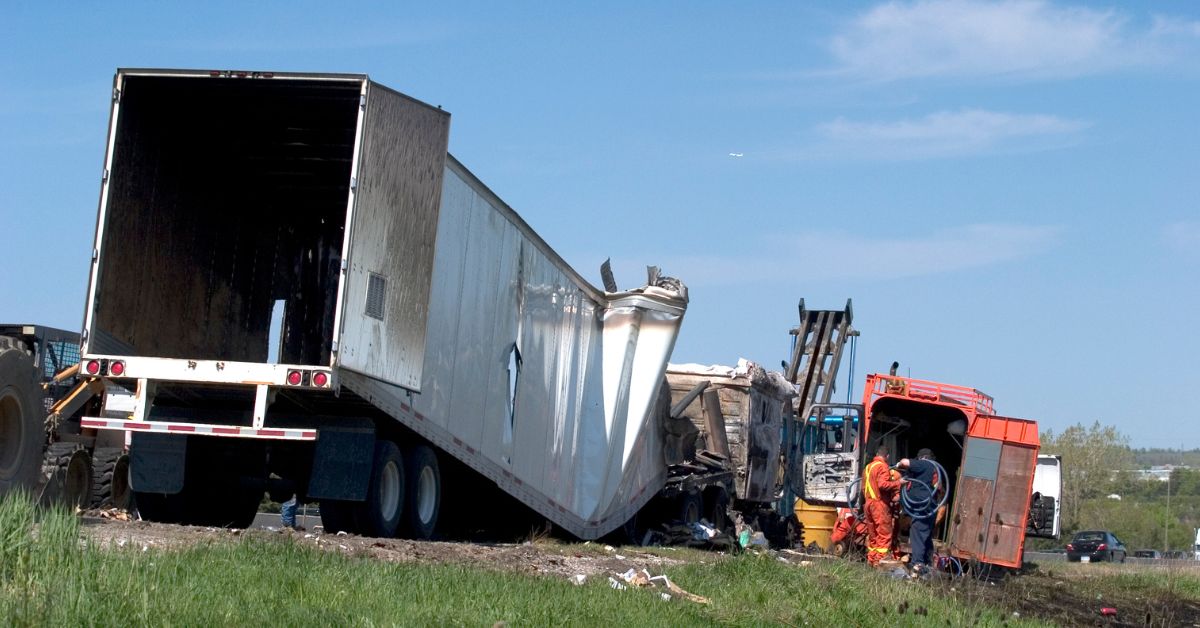
Multi-Vehicle Crash with Semi-Truck Shuts Down I-285 in the Atlanta Area
Injuries sustained in multi-vehicle crashes can present the most challenging road to an adequate settlement for victims in Georgia. In a seven-vehicle crash, like this one that occurred on I-285 near Smyrna, additional variables like the presence of a commercial truck and hazardous material definitely require the guidance of an Atlanta truck accident lawyer. In this article, we’ll examine the complex but vital process of establishing fault in major crashes like this one and the important legal questions that arise. Ultimately, multi-vehicle crashes are not just about who hit whom. The entire collision sequence must be dissected and examined, and the questions must be asked: which impact caused which injury, and which insurer is trying to control the timeline to protect their bottom line?
These types of collisions escalate and convolute quickly. Every driver may describe the sequence differently. Every insurer may attempt to shift blame onto another vehicle in the chain reaction. Meanwhile, injured victims are often left dealing with medical treatment, lost income, vehicle damage, and uncertainty about who is actually responsible for paying the claim. Evidence preservation becomes so important with a crash of this scale. Traffic camera footage, dashcam recordings, witness statements, truck driver logs, black box data, maintenance records, and roadway evidence can all play a major role in reconstructing the sequence of events. For injured victims, working with an experienced legal team early in the process can help prevent insurers from controlling the narrative before the facts are fully developed. If you or a loved one was involved in a similar Georgia highway collision, call Car Crash Lawyer Georgia at (678) 613-2797 to discuss your legal options.
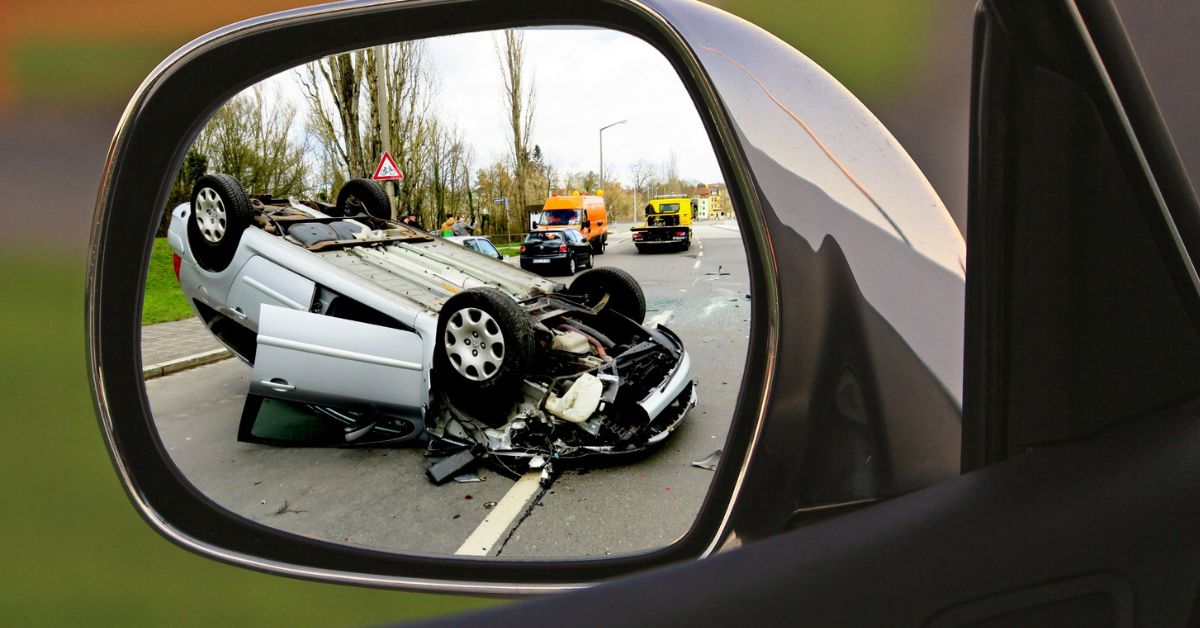
What Happened in the I-285 Multi-Vehicle Crash Near Smyrna
According to FOX 5 Atlanta, a multi-vehicle crash involving a semi-truck and six other vehicles shut down all northbound lanes of Interstate 285 in Cobb County during the morning commute. The crash happened near Smyrna between Cobb Parkway and Highway 41, creating traffic delays that stretched for several miles. Officials later reopened one lane, but the area remained heavily backed up while crews continued working at the scene.
FOX 5 also reported that hazmat crews responded because of a fuel spill on the roadway. Preliminary crash information indicated injuries, but officials had not released details about the conditions of those injured or the possible cause of the crash. Those unanswered questions matter because the first report rarely captures the full legal picture after a major collision involving several vehicles and a commercial truck. This is where a firm like Car Crash Lawyer Georgia comes in.
Interstate 285 Traffic Conditions Became Part of the Emergency Response
I-285 is one of metro Atlanta’s busiest traffic corridors, especially during the morning commute. When a major crash blocks northbound lanes near Cobb Parkway and Highway 41, emergency crews must manage injured motorists, disabled vehicles, traffic backups, and scene safety at the same time. Those conditions can affect what investigators later review. Lane closures, stopped traffic, vehicle resting positions, debris, and roadway markings may all help explain how the collision unfolded. An Atlanta Truck Accident Lawyer may use those details to understand whether the crash involved one primary impact or several separate collision events.
Fuel Spill Reports Added Complexity to the Accident Investigation
FOX 5 Atlanta also reported that emergency crews requested hazmat assistance because of a fuel spill connected to the crash scene. Hazardous roadway conditions can complicate an already difficult investigation because responders must focus on both public safety and roadway cleanup while preserving critical crash evidence. Fuel spills, leaking vehicle fluids, scattered debris, and disabled vehicles may all affect how long a roadway remains closed and how investigators document the collision scene. These conditions can also increase the likelihood of secondary impacts if approaching traffic cannot stop safely in time.
Hazardous Records May Clarify the Truck Accident Timeline
A fuel spill can create records that do not appear in a standard crash file. Hazmat crews may document when they arrived, what area they treated, how long the cleanup took, and what roadway hazards remained after the initial impact. Those details may help show how serious the crash scene was and whether conditions on the roadway created additional risk for approaching drivers.
Preliminary Injury Reports Raised Immediate Insurance Questions
Although officials had not publicly released details regarding the reported injuries, crashes involving multiple vehicles and commercial trucks frequently create immediate insurance disputes. Several insurers may become involved at once, and each company may attempt to protect its own financial interests by assigning blame elsewhere in the collision sequence. For drivers and passengers, this often creates confusion during the earliest stages of recovery. One insurance company may claim its driver was struck from behind. Another may argue its driver had no ability to avoid the crash. A trucking insurer may point to traffic congestion or another vehicle’s actions as the true cause of the chain reaction. These competing narratives can make it difficult for injured victims to determine who is actually responsible for paying damages.
Why Multi-Vehicle Collisions Produce Conflicting Driver Statements
In a major chain-reaction crash, drivers often remember different parts of the event. One person may focus on the first impact, while another remembers only the vehicle that struck them seconds later. That does not mean anyone is lying. It means the crash sequence must be tested against physical evidence, roadway conditions, vehicle damage, and available video before any insurer’s version is accepted as fact.
Trucking Companies and Insurers Will Begin Their Investigation Immediately
When a semi-truck is involved, the claim can move quickly into commercial insurance territory. Trucking companies and their insurers often have systems in place to review crashes, inspect vehicles, and collect driver information soon after a collision. Injured drivers and passengers should not assume those early investigations are designed to protect them.
Why Multi-Vehicle Crashes Create Complicated Legal Claims
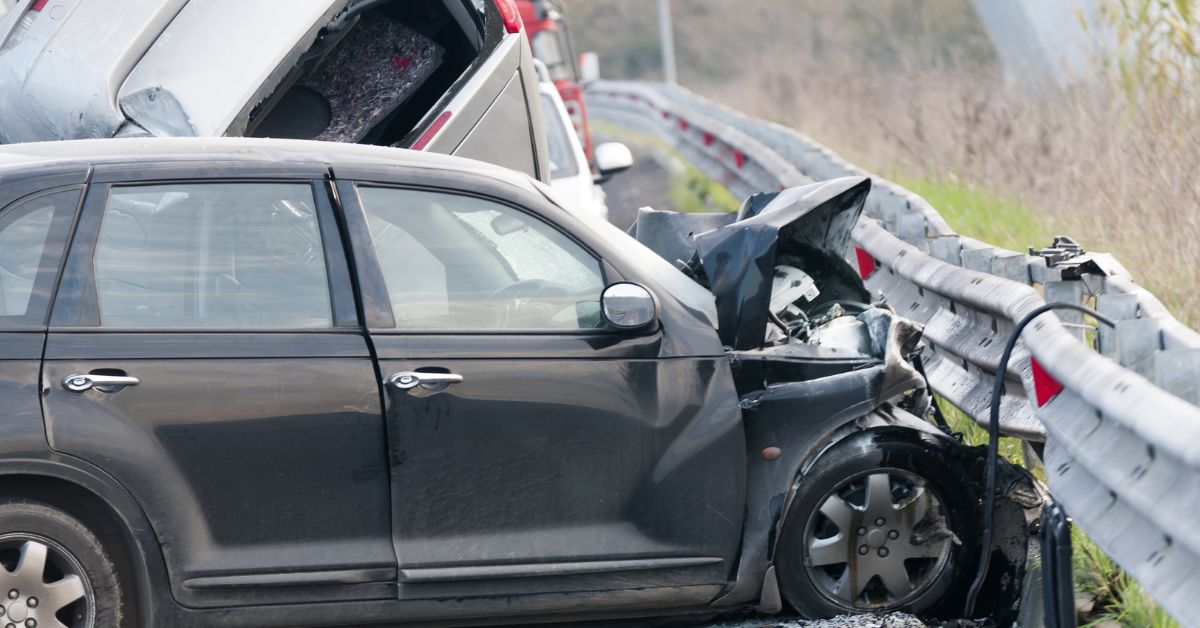
A multi-vehicle crash creates legal problems because one collision can contain several separate claims. One driver may claim they were pushed forward. Another may argue they had no time to stop. A passenger may suffer injuries from more than one impact. A commercial truck may become part of the sequence before or after other vehicles collide. That is why these cases cannot be evaluated by looking only at the final resting positions of the vehicles. A proper claim review asks how the crash began, how it spread across the roadway, which drivers contributed to each stage, and how those impacts affected the people inside each vehicle. This is where an Atlanta truck accident lawyer can help organize the facts before insurers reduce the claim to whichever version benefits them most.
Chain-Reaction Collisions Involve Multiple Impact Points
In a chain-reaction crash, the first impact is not always the only impact that causes injuries. One vehicle may strike another, causing secondary collisions across multiple lanes of traffic. Drivers may become trapped between vehicles, sideswiped during evasive maneuvers, or pushed into barriers, guardrails, or stopped traffic. As a result, different occupants may experience different injuries depending on where and when their vehicle was struck. This creates a major legal challenge because each insurance company may try to isolate only one portion of the crash sequence. One insurer may argue that its driver caused only minor contact. Another may claim that the most serious injuries occurred during a later impact involving a different vehicle. Your legal team may need to examine vehicle damage patterns, roadway positioning, electronic data, and medical records to determine how each collision contributed to the injuries being claimed.
Different Drivers May Describe the Same Crash Differently
Large highway collisions often produce conflicting witness accounts because each driver sees only part of the event unfold. A driver near the front of the crash may believe traffic stopped suddenly. A driver farther back may believe another vehicle changed lanes unexpectedly. A commercial truck driver may claim visibility limitations or limited stopping distance affected the outcome. These differing accounts can complicate fault analysis, especially when drivers begin speaking with insurers before investigators fully reconstruct the crash sequence.
Insurance Companies Often Use Conflicting Statements Strategically
Insurance adjusters understand that inconsistent statements can weaken injury claims. If drivers disagree about speed, braking, lane changes, or the timing of impacts, insurers may use those inconsistencies to reduce settlement offers or delay payment while they continue disputing liability. For injured victims, preserving evidence early becomes critical because physical evidence often provides a more reliable picture of the crash than memory alone.
Commercial Trucking Cases Add Additional Legal Layers
Commercial trucks operate under federal safety regulations, inspection requirements, driver-hour restrictions, maintenance obligations, and commercial insurance standards that do not apply to most passenger vehicles. This means the legal investigation may involve driver qualification records, electronic logging devices, maintenance reports, cargo records, dispatch communications, inspection history, and onboard truck data. A truck accident lawyer in the Atlanta area should review these records to determine whether fatigue, improper maintenance, overloaded cargo, distracted driving, or regulatory violations contributed to the collision.
Trucking Companies Seek to Limit Their Financial Exposure Immediately
Commercial trucking insurers and defense teams may begin collecting evidence almost immediately after a serious crash. Investigators may inspect the truck, review driver statements, analyze black box data, and evaluate roadway evidence before injured victims fully understand the extent of their injuries. This early response can create an imbalance if injured drivers wait too long to preserve evidence or seek legal guidance. Important trucking records may only remain available for a limited time unless someone requests that they be preserved.
Commercial Insurance Policies Increase the Stakes of Truck Accident Settlements
Commercial trucking policies often involve significantly larger coverage limits than ordinary passenger vehicle insurance. As the financial exposure increases, insurers may become more aggressive in disputing fault, questioning injuries, or shifting blame to other drivers involved in the collision. That added pressure can make settlement negotiations far more difficult without strong documentation and a detailed legal strategy.
Atlanta Highway Crashes Produce Competing Medical Causation Arguments
One of the most difficult legal issues in a multi-vehicle collision involves determining which impact caused which injury. A driver may suffer one injury during the initial collision and another during a secondary impact moments later. Passengers may experience completely different injury patterns even while riding in the same vehicle.
These complications often create disputes between insurance carriers over medical responsibility. One insurer may argue that another collision caused the injury. Another may claim the injury existed before the crash. In severe cases, insurers may dispute whether certain medical treatment relates directly to the accident at all.
Why Delayed Symptoms Complicate Truck Crash Injury Claims
Some injuries do not fully appear until hours or days after a highway collision. Neck pain, spinal injuries, concussions, soft tissue damage, and nerve symptoms may worsen after the initial adrenaline response fades. This can create additional challenges when insurers try to rely heavily on early crash reports or initial emergency evaluations. Medical documentation often becomes one of the most important parts of the legal claim because treatment records help establish when symptoms appeared and how the injuries progressed over time.
Long-Term Medical Issues May Affect Claim Value
A serious multi-vehicle crash can create long-term medical and financial consequences that extend far beyond the initial emergency response. Some victims may require surgery, physical therapy, pain management, rehabilitation, or future medical care. Others may lose income while recovering or face permanent limitations that affect their ability to work. Atlanta Truck Accident Lawyers may work to ensure these long-term losses are properly documented before insurers attempt to resolve the claim too quickly.
Several Insurance Policies May Apply to the Same Crash
Multi-vehicle collisions often involve overlapping insurance coverage questions. A single crash may trigger personal auto policies, commercial trucking coverage, employer liability policies, uninsured motorist claims, or umbrella coverage, depending on the circumstances. This creates confusion because each insurer may try to limit its own responsibility while pointing toward another driver or policy. Injured victims may receive calls from several adjusters at once, each asking for statements, documentation, or recorded interviews.
Fault Allocation Can Directly Affect Compensation
Georgia follows a modified comparative negligence system. For injured motorists, this means compensation may depend on how fault is divided among the parties involved. If insurers succeed in assigning a higher percentage of fault to an injured driver, they may reduce the value of the claim significantly. In a crash involving several vehicles, determining fault percentages can become highly contested because every insurer has a financial incentive to reduce its share of responsibility.
Legal Representation Helps Organize Complex Claims
Without a clear legal strategy, injured victims can quickly become overwhelmed by medical treatment, insurance disputes, vehicle damage claims, and conflicting information from several parties at once. A well-organized claim requires evidence preservation, policy review, liability analysis, medical documentation, and careful communication with insurers throughout the process. An Atlanta Truck Accident Lawyer can help injured victims manage these competing issues while building a stronger case for full financial recovery after a serious I-285 collision.
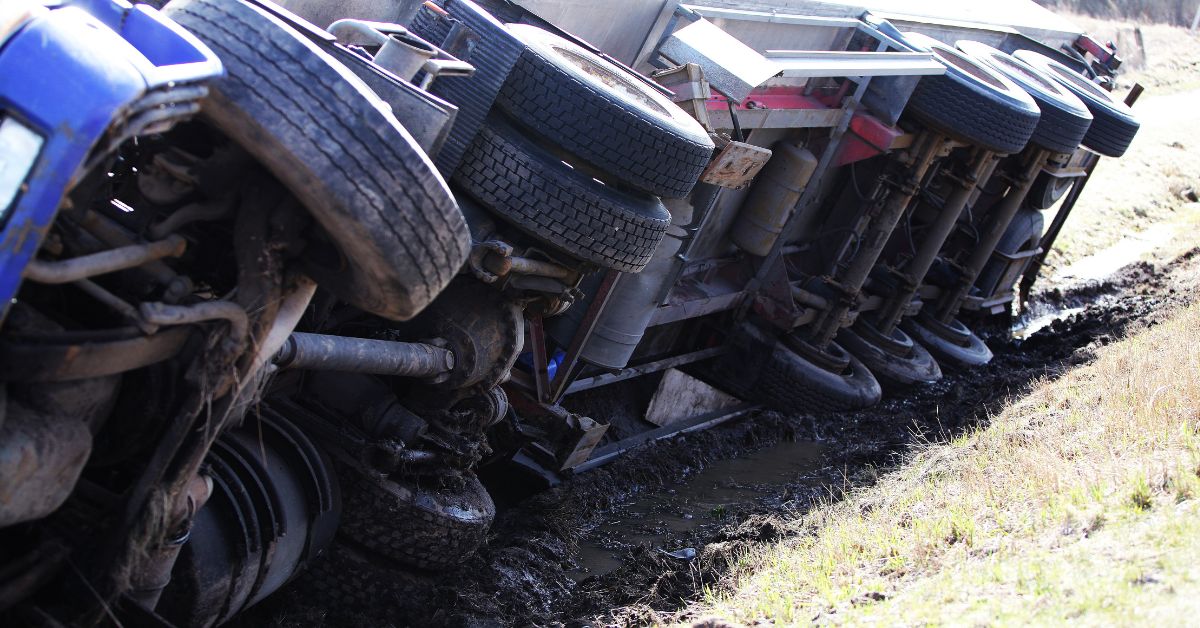
How a Semi-Truck Can Change the Legal Stakes After a Georgia Crash
The presence of a commercial truck can dramatically change the legal and financial stakes after a Georgia highway collision. Unlike a standard passenger vehicle accident, crashes involving semi-trucks often trigger a second layer of investigation involving commercial insurance carriers, federal trucking regulations, vehicle maintenance records, driver qualification files, and corporate defense teams. Even when investigators have not yet determined the official cause of the crash, the involvement of a commercial vehicle may require injured victims to preserve evidence quickly before critical records disappear or insurers begin shaping the narrative around liability.
In a multi-vehicle collision like the one reported on I-285 near Smyrna, a semi-truck can also increase the complexity of the crash sequence itself. Commercial trucks operate differently than passenger vehicles because of their size, weight, stopping distance, blind spots, and braking limitations. This means investigators may need to evaluate whether the truck contributed to the chain reaction directly, whether another vehicle triggered the collision first, or whether secondary impacts caused additional injuries after the initial crash occurred. An Atlanta Truck Accident Lawyer may review each stage of the collision separately to determine how the truck’s presence affected the overall sequence of events.
When Commercial Trucking Crash Cases Involve Corporate Insurers
Passenger vehicle crashes typically involve one or two personal auto insurance companies. Commercial truck crashes can involve corporate insurers, commercial liability carriers, excess insurance policies, freight companies, leasing entities, maintenance contractors, and legal defense teams representing the trucking company’s financial interests.
This changes the legal environment immediately because commercial insurers often begin preparing defenses within hours of a serious crash. While injured victims focus on medical treatment, vehicle damage, and missed work, trucking insurers may already be reviewing driver statements, electronic records, inspection history, and roadway evidence.
Trucking Companies May Launch Immediate Internal Investigations
Large trucking companies often have established crash-response procedures for serious highway collisions. Internal investigators may inspect the truck, review driver logs, analyze black box data, and document the scene while evidence remains fresh. In some cases, outside accident reconstruction specialists may also become involved before injured drivers fully understand the extent of their injuries.
This early response can create a significant imbalance if injured victims do not move quickly to preserve their own evidence and protect their legal interests.
Preservation Letters Can Become Critical Early in the Case
One of the most important legal steps after a serious commercial truck crash involves sending preservation or spoliation letters to protect evidence. These requests may seek electronic logging device data, maintenance records, inspection reports, dispatch communications, onboard GPS information, driver qualification files, and vehicle inspection history before those records are altered, overwritten, or lost.
An Atlanta Truck Accident Lawyer may send these requests early in the investigation to help ensure important trucking records remain available for review.
Federal Trucking Regulations Can Expand the Investigation
Commercial trucks operate under federal safety regulations that do not apply to ordinary passenger vehicles. Investigators may need to examine whether the truck driver complied with hours-of-service limitations, inspection requirements, maintenance obligations, cargo securement rules, and safety regulations established for interstate trucking operations.
This creates an additional layer of legal complexity because violations may not appear in the initial crash report. Instead, investigators may need to analyze driver logs, electronic data, maintenance records, and company documentation to determine whether regulatory violations contributed to the collision.
Driver Fatigue and Maintenance Records May Become Relevant
Long driving hours, inadequate rest periods, poor vehicle maintenance, brake problems, tire failures, and overloaded cargo can all become important issues in commercial truck litigation. Even if another vehicle initiated part of the chain reaction, trucking records may still reveal whether the truck driver had the ability to reduce the severity of the collision or avoid secondary impacts.
These investigations often require technical analysis and careful review of commercial records that ordinary drivers would never encounter in a standard car accident claim.
Black Box Data May Help Reconstruct the Collision Timeline
Many commercial trucks contain electronic control modules or onboard systems capable of recording speed, braking activity, steering input, throttle position, and other operational data before impact. This information can become extremely important when drivers provide conflicting accounts about how the crash unfolded.
An Atlanta Truck Accident Lawyer may work with experts to review electronic truck data alongside roadway evidence, crash photographs, and witness statements to build a clearer timeline of the collision sequence.
Truck Size can Change the Force of Impact in Multi-Vehicle Collisions
A commercial truck’s size and weight can increase the force involved in a highway collision. Even when a truck does not cause the first impact, its movement, braking distance, and position in traffic can affect how the crash spreads across multiple lanes. That distinction matters. The legal question is not simply whether the truck was present. The question is whether the truck’s conduct, condition, or movement contributed to the injuries and losses claimed.
Secondary Impacts Can Complicate Injury Claims
In multi-vehicle truck crashes, some victims suffer injuries during the initial collision while others are injured during later impacts involving different vehicles. This can complicate insurance disputes because several insurers may argue over which impact caused specific injuries or which driver bears primary responsibility for the damages being claimed.
These disputes often become more complicated when victims suffer spinal injuries, head trauma, soft tissue injuries, or symptoms that worsen after the crash.
Medical Documentation Becomes More Important in Complex Crash Sequences
Because several impacts may occur within seconds of one another, detailed medical documentation often becomes critical in proving how the collision affected each victim. Treatment records, imaging studies, specialist evaluations, and ongoing medical care may all help establish the connection between the crash sequence and the injuries being claimed.
Strong documentation can also help prevent insurers from minimizing injuries simply because several vehicles were involved at once.
Commercial Policies Can Increase Financial Exposure for Insurers
Commercial trucking policies often carry significantly larger coverage limits than ordinary passenger vehicle insurance policies. As potential financial exposure increases, insurers may become more aggressive in disputing fault allocation, injury severity, and the extent of claimed damages.
This can create a more difficult claims process for injured drivers and passengers because several insurance carriers may attempt to reduce their share of responsibility at the same time. One insurer may blame another vehicle in the chain reaction. Another may argue that pre-existing conditions caused part of the injury. Another may challenge whether certain treatment was medically necessary.
Fault Allocation Can Affect Compensation Under Georgia Law
Georgia’s comparative fault rules may reduce compensation if insurers successfully shift part of the blame onto an injured driver. In a Georgia multi-vehicle collision involving a semi-truck, determining fault percentages can become extremely contested because every insurer has a financial incentive to reduce its own exposure.
As a result, injured victims often face a much more complicated legal process than they would in a standard two-car collision.
Early Legal Guidance Can Help Protect the Full Value of the Claim
Serious truck accident claims often move quickly once commercial insurers and defense teams become involved. Waiting too long to preserve evidence, document injuries, or evaluate liability can make it harder to challenge incomplete narratives later in the case.
An Atlanta Truck Accident Lawyer can help injured victims preserve trucking evidence, identify all available insurance coverage, evaluate liability issues, and build a stronger claim for compensation before insurers gain control of the investigation.
How Truck Accident Lawyers Prove Chain Reaction Fault
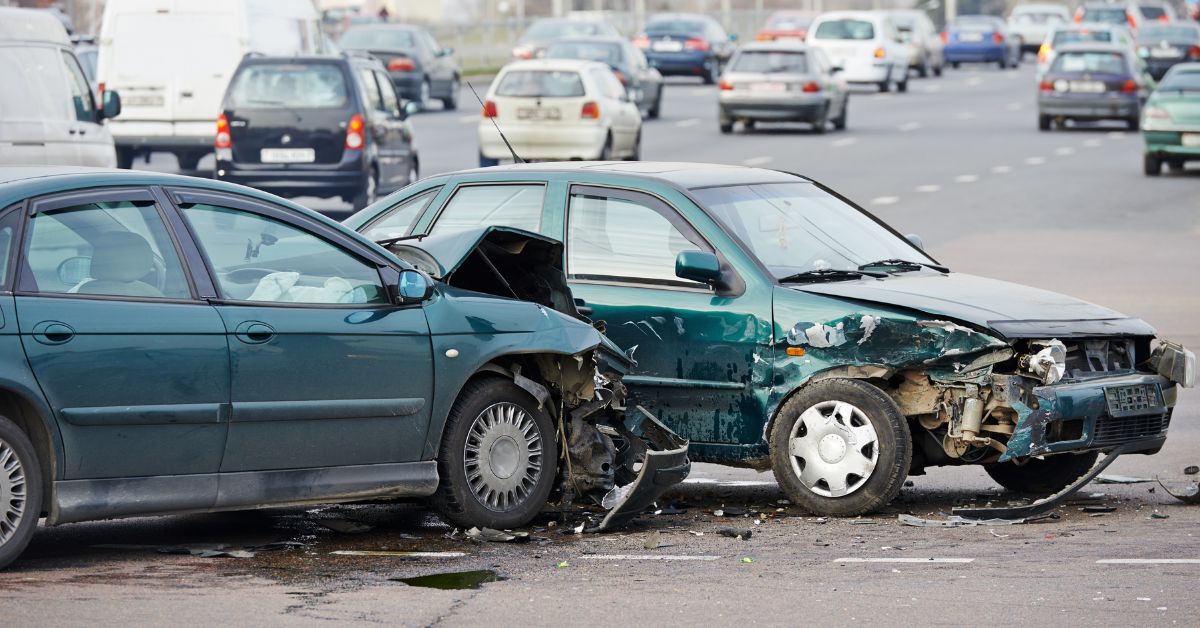
Proving fault in a chain-reaction crash requires much more than identifying which vehicle made the first impact. In a multi-vehicle collision involving a commercial truck, investigators often need to determine how each impact occurred, how traffic conditions changed in the seconds leading up to the crash, and whether later collisions caused additional injuries or property damage. For injured victims, this process becomes especially important because insurance companies may try to separate the collision into smaller events to reduce what they pay.
An Atlanta Truck Accident Lawyer will often approach a chain-reaction crash by rebuilding the collision step by step. Instead of looking only at the final resting position of the vehicles, the legal team may examine vehicle movement, impact angles, roadway positioning, braking patterns, electronic truck data, surveillance footage, witness accounts, and medical timelines. The goal is to understand not only how the crash began, but also how the collision sequence affected each injured person involved.
Crash Reconstruction Helps Identify the Order of Impacts
One of the first legal challenges in a chain-reaction collision involves determining the order in which the vehicles collided. In a seven-vehicle crash, several impacts may occur within seconds of one another. One driver may strike another vehicle after being pushed from behind. Another vehicle may spin into a separate lane after the initial impact. A commercial truck may become involved during a later stage of the collision sequence rather than at the beginning.
These distinctions matter because liability may depend on which impact caused the injury being claimed. An Atlanta Truck Accident Lawyer may work with accident reconstruction specialists to examine roadway evidence, debris patterns, impact damage, vehicle crush zones, and electronic data to determine how the sequence unfolded.
Vehicle Damage Patterns Can Reveal How the Collision Progressed
Different types of damage often help investigators understand where and when impacts occurred. Rear-end crush damage, side-impact intrusion, underride damage, wheel deformation, and secondary impact marks can all help establish how vehicles moved during the crash.
For example, a driver struck from behind by a commercial truck may suffer a violent forward impact that pushes the vehicle into stopped traffic ahead. In another scenario, a smaller passenger vehicle may become pinned between two larger vehicles, creating multiple injury events within seconds.
Medical Evidence Must Match the Collision Timeline
Medical documentation becomes extremely important in these cases because different impacts may cause different injuries. A victim may suffer neck and back injuries during the first rear-end collision, then sustain shoulder trauma or head injuries during a secondary side impact moments later.
An Atlanta Truck Accident Lawyer may compare crash reconstruction findings with medical imaging, emergency room records, orthopedic evaluations, and neurological testing to show how the collision sequence contributed to the injuries being treated.
Black Box Data and Electronic Truck Records Can Support the Claim
Commercial trucks often contain electronic systems capable of recording speed, braking activity, steering input, throttle use, and sudden deceleration before impact. This information can become critical when drivers disagree about how quickly traffic slowed or whether the truck driver attempted to avoid the collision.
Unlike ordinary witness testimony, electronic truck data can sometimes provide objective information regarding vehicle movement in the moments before impact. Investigators may use this data to determine whether the truck maintained a safe following distance, whether the driver reacted appropriately to traffic conditions, or whether braking occurred too late to avoid the collision.
Electronic Records Can Contradict Driver Statements
In some chain-reaction crashes, drivers may unintentionally misremember how events unfolded because everything happened so quickly. A truck driver may believe traffic stopped without warning. A passenger vehicle driver may believe another car changed lanes unexpectedly. Electronic truck data may help clarify which version aligns more closely with the physical evidence.
This becomes especially important when several insurance companies attempt to shift blame between drivers involved in the crash sequence.
Preservation Requests May Protect Critical Trucking Evidence
Electronic trucking data may not remain available forever. Certain onboard systems overwrite information after a limited period of time or after additional driving activity occurs. Because of this, legal teams often move quickly to request preservation of black box data, electronic logging device records, maintenance history, and driver communications before evidence disappears.
An Atlanta Truck Accident Lawyer may send formal preservation requests early in the claim process to help secure records that could later become essential to proving fault.
Witness Accounts Often Require Careful Comparison
Witness testimony can help investigators understand traffic flow, lane changes, braking behavior, and how the crash sequence unfolded across several lanes of highway traffic. However, witnesses involved in a violent highway collision may only see portions of the event from their specific vantage point.
One driver may focus on the first collision. Another may only remember the secondary impacts after traffic came to a sudden stop. Passengers may notice details that drivers never saw because they were reacting defensively behind the wheel.
Independent Witnesses Can Strengthen the Investigation
Drivers directly involved in the collision often have financial and legal reasons to protect themselves when speaking with insurers. Independent witnesses who were not directly involved may provide more neutral observations about traffic speed, braking distance, roadway conditions, or the movement of the semi-truck before impact.
Investigators may also compare witness statements against dashcam footage, traffic camera recordings, and vehicle damage to identify inconsistencies or confirm important details.
Inconsistent Statements Can Affect Settlement Negotiations
Insurance companies frequently use conflicting witness accounts to argue that fault remains unclear. When liability becomes disputed, insurers may delay settlement negotiations or reduce compensation offers while continuing their investigation.
A strong legal strategy often involves organizing witness evidence in a way that supports the physical evidence and medical timeline rather than allowing insurers to focus only on conflicting statements.
Georgia Truck Accident Lawyers Must Connect Injuries to Specific Impacts
One of the most difficult parts of a multi-vehicle injury claim involves proving which impact caused which injury. In chain-reaction crashes, victims may experience several collisions almost simultaneously. Some injuries appear immediately, while others worsen over time as inflammation, nerve damage, or soft tissue trauma develops.
For example, a driver struck by a semi-truck may initially report lower back pain and stiffness, then later develop radiating nerve pain, shoulder injuries, or concussion symptoms after follow-up medical evaluation. A passenger in another vehicle may suffer wrist injuries from bracing during impact, followed by headaches and neck pain days later.
Insurance Companies Often Challenge Causation in Multi-Impact Crashes
Insurers may attempt to argue that a particular injury resulted from a later impact involving another vehicle rather than from the collision involving their insured driver. In other situations, insurers may argue that the injury existed before the crash or that treatment became excessive after the initial emergency response.
These disputes can become especially complicated when several insurers participate in the claim simultaneously.
Thorough Medical Documentation Helps Support Compensation Claims
Medical records, imaging studies, specialist referrals, physical therapy notes, neurological testing, and physician evaluations can all help establish how the crash affected the injured person over time. This documentation may become critical when pursuing compensation for ongoing treatment, missed work, reduced earning capacity, rehabilitation costs, pain, and long-term physical limitations.
An Atlanta Truck Accident Lawyer may work closely with medical providers and experts to build a claim that reflects the full extent of the injuries connected to the collision sequence.
Multi-Vehicle Claims Require a Coordinated Legal Strategy
A serious chain-reaction crash can involve commercial trucking insurers, passenger vehicle carriers, medical providers, accident reconstruction experts, and several competing versions of events all at the same time. Without a coordinated legal strategy, injured victims may struggle to preserve evidence, respond to insurance requests, and understand how fault allocation affects compensation under Georgia law.
This complexity often increases when injuries prevent victims from working, attending appointments, or managing multiple insurance conversations during recovery.
Organized Legal Representation Can Reduce Claim Delays
Truck accident claims often involve extensive documentation requests, recorded statement requests, medical record reviews, and ongoing insurance negotiations. Delays, missing records, or incomplete evidence can weaken the claim and make it easier for insurers to minimize compensation.
An organized legal team can help coordinate evidence collection, communicate with insurers, monitor deadlines, and position the claim more effectively during settlement negotiations.
Strong Evidence Can Help Maximize Financial Recovery
The strongest truck accident claims rely on evidence that clearly explains how the crash occurred, how the injuries developed, and how the collision affected the victim’s health, finances, and future. When the legal team presents a well-supported claim backed by medical documentation, crash reconstruction evidence, and trucking records, insurers often have less room to dispute liability or undervalue the damages involved.
For injured victims, that process can make a substantial difference in recovering compensation for medical expenses, lost income, future treatment needs, rehabilitation costs, and the long-term effects of a serious Georgia highway collision.
Who is at Held Liable in Multi-Vehicle Accidents?
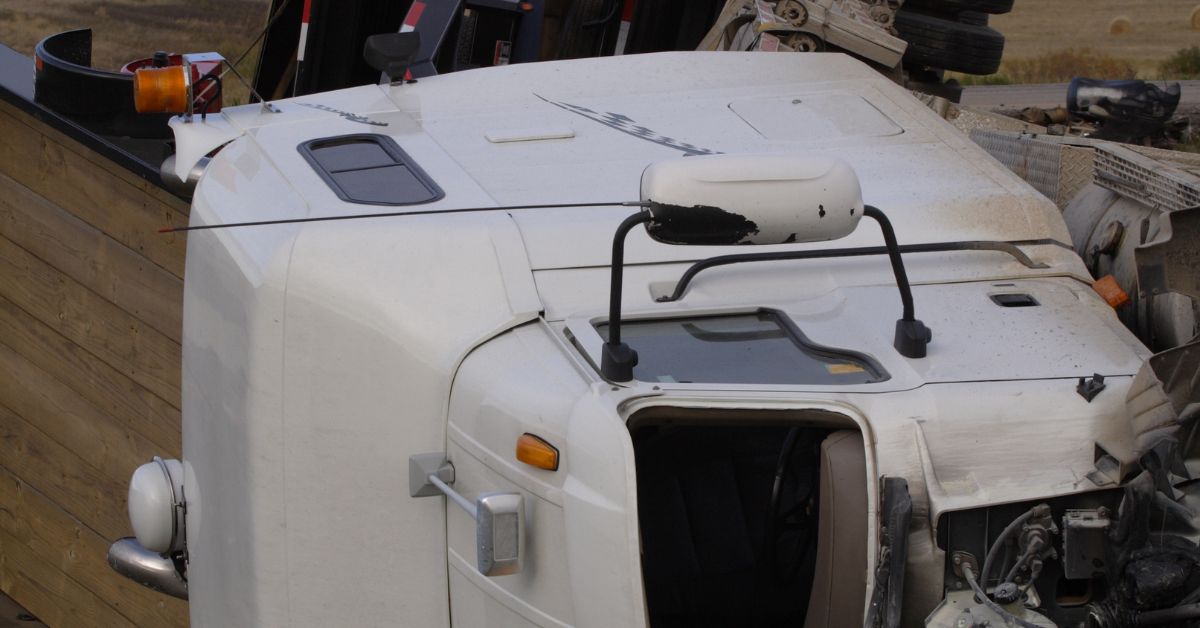
Determining liability in a multi-vehicle accident often becomes one of the most heavily disputed parts of the entire claim. Unlike a standard two-car collision where fault may appear more straightforward, a chain-reaction crash involving several drivers and a commercial truck can produce overlapping liability arguments, competing insurance positions, and conflicting interpretations of how the sequence unfolded. In these cases, investigators must determine not only who made contact first, but also whether later impacts, unsafe driving decisions, roadway conditions, or commercial trucking conduct contributed to the overall damage and injuries.
Georgia law does not automatically place all responsibility on the driver who caused the first collision. Instead, fault may be divided among several parties depending on how each person contributed to the crash sequence. That means one driver may bear responsibility for the initial impact while another may become responsible for secondary collisions, unsafe lane changes, or failure to slow down appropriately in congested traffic conditions. An Atlanta Truck Accident Lawyer may review every stage of the collision to determine how liability should actually be allocated instead of relying solely on early insurance assumptions.
Driver Conduct Often Becomes the Starting Point for Fault Analysis
Investigators typically begin by reviewing how each driver behaved before the collision occurred. Speed, following distance, distraction, lane changes, braking behavior, aggressive driving, fatigue, and reactions to traffic slowdowns may all become important when assigning fault in a chain-reaction accident.
For example, a driver traveling too closely behind another vehicle may not have enough time to stop once traffic slows unexpectedly. Another driver may attempt an unsafe lane change while trying to avoid stopped vehicles ahead. In a commercial trucking case, investigators may also examine whether the truck driver adjusted appropriately to traffic conditions based on the truck’s size and stopping distance.
Traffic Conditions Can Influence Fault Allocation
Heavy traffic on Interstate 285 often creates compressed driving conditions where even small mistakes can escalate quickly into larger collisions. Sudden braking, merging congestion, construction slowdowns, and limited reaction time can all affect how investigators evaluate each driver’s conduct leading up to the crash.
This becomes especially important in multi-vehicle collisions because one driver’s unsafe action may trigger several separate impacts involving vehicles farther back in traffic.
Investigators Compare Driver Actions Against Reasonable Driving Standards
Fault determination often depends on whether a driver acted reasonably under the circumstances. Investigators may examine whether the driver maintained a safe following distance, reacted appropriately to changing traffic conditions, stayed attentive behind the wheel, and operated the vehicle safely based on roadway conditions.
An Atlanta Truck Accident Lawyer may compare driver conduct against Georgia traffic laws, commercial trucking regulations, and the available roadway evidence to determine whether another party acted negligently before the collision sequence began.
Commercial Trucking Companies May Share Legal Responsibility
When a semi-truck becomes involved in a major collision, liability may extend beyond the truck driver alone. In some cases, the trucking company itself may share responsibility if company policies, maintenance failures, driver supervision issues, or operational decisions contributed to the crash.
For example, investigators may examine whether the trucking company allowed unsafe driving schedules, failed to maintain the truck properly, ignored inspection problems, or pressured drivers to meet unrealistic delivery deadlines. These issues may not appear immediately after the crash, but they can become important later as the legal investigation develops.
Employer Liability May Apply During Commercial Operations
Under certain circumstances, trucking companies may become legally responsible for the actions of drivers operating within the scope of their employment. If the truck driver was performing work-related duties during the collision, injured victims may pursue claims against the company’s commercial insurance coverage in addition to any claims involving the individual driver.
Commercial liability issues often increase the complexity of the case because trucking companies and their insurers may aggressively defend against claims involving serious injuries and substantial financial exposure.
Company Records Can Reveal Additional Liability Issues
Internal company records may sometimes reveal whether safety concerns existed before the collision occurred. Maintenance history, inspection reports, hiring records, prior safety violations, driver discipline files, and dispatch communications can all become relevant depending on the facts of the case.
An Atlanta Truck Accident Lawyer may investigate these records to determine whether company conduct contributed to the collision or increased the risk of harm to other drivers on the roadway.
Georgia Comparative Fault Rules Can Affect Compensation
Georgia follows a modified comparative negligence system, which means fault may be divided among multiple parties involved in the crash. Under this system, an injured person’s compensation may decrease if investigators determine that person partially contributed to the accident.
This often becomes a major issue in multi-vehicle collisions because insurance companies frequently attempt to assign blame across several drivers at once. One insurer may argue that another driver stopped suddenly. Another may claim that a passenger vehicle created unsafe spacing. A trucking insurer may argue that surrounding traffic conditions made the collision unavoidable.
Insurance Companies Often Dispute Fault Percentages Aggressively
Fault percentages directly affect how much each insurer may ultimately pay. Because of this, insurance carriers often spend significant time disputing how responsibility should be divided between drivers involved in the crash sequence.
In some cases, insurers may attempt to shift partial blame onto injured victims themselves by arguing they followed traffic too closely, failed to react quickly enough, or contributed to the collision through their own driving behavior.
Strong Evidence Helps Prevent Unfair Fault Allocation
Accurate fault determination depends on evidence that clearly explains how the crash unfolded. Vehicle damage, traffic camera footage, witness accounts, roadway markings, electronic data, and medical records may all help establish which drivers contributed to the collision and how the injuries occurred.
An Atlanta Truck Accident Lawyer may organize this evidence strategically to challenge unsupported blame-shifting arguments and protect the injured victim’s ability to pursue full financial compensation.
Collision Different Parties May Be Responsible for Different Losses
A multi-vehicle crash can create separate responsibility for separate parts of the harm. One driver may contribute to the initial impact. Another may worsen the crash by following too closely. A trucking company may face questions about driver training or maintenance. A later impact may increase the severity of an injury that began seconds earlier. That is why liability should not be reduced to one name on a claim form. A complete review looks at who contributed to the crash, how each contribution affected the injuries, and which insurance policies should respond.
Liability Can Continue Evolving During the Investigation
Fault determinations often change as investigators uncover additional evidence. New witness statements, electronic truck data, roadway footage, medical evaluations, and reconstruction findings may alter how liability is assigned weeks or even months after the collision.
For injured victims, this means early insurance conclusions do not always reflect the final legal outcome of the case.
Thorough Legal Review Helps Protect the Full Scope of the Claim
A strong legal investigation examines every possible source of liability before settlement negotiations begin. This helps ensure that injured victims do not accept incomplete fault determinations or settle claims before the full picture becomes clear.
An Atlanta Truck Accident Lawyer can evaluate the collision sequence, identify all potentially responsible parties, review commercial trucking evidence, and pursue compensation that reflects the true impact of a serious Georgia highway crash.
How Our Truck Crash Lawyers Protect the Full Value of the Claim in Georgia
A multi-vehicle collision involving a semi-truck can create far more than a standard insurance claim. Crashes like the one reported on I-285 near Smyrna often involve several drivers, multiple insurance carriers, conflicting accounts of how the collision unfolded, and commercial trucking investigations that begin almost immediately after the crash. While injured victims focus on medical treatment, missed work, and recovery, insurers may already be disputing fault, minimizing injuries, or attempting to shift liability elsewhere in the chain reaction.
Car Crash Lawyer Georgia helps clients protect the full value of their claim by preserving evidence, reviewing trucking records, analyzing liability issues, and challenging insurance tactics that reduce compensation. Our legal team understands how to navigate the complicated overlap between commercial trucking claims, multi-vehicle accident investigations, and Georgia fault laws. If you or a loved one was injured in a serious highway collision involving multiple vehicles or a semi-truck, call (678) 613-2797 to speak with Car Crash Lawyer Georgia about your legal options.
Contact usfor a free consultation.
Phone: (304) 449-5157